K.P. Singh: The Visionary Behind DLF and the Transformation of Modern Gurugram
I. Introduction: The Architect of Modern Gurugram
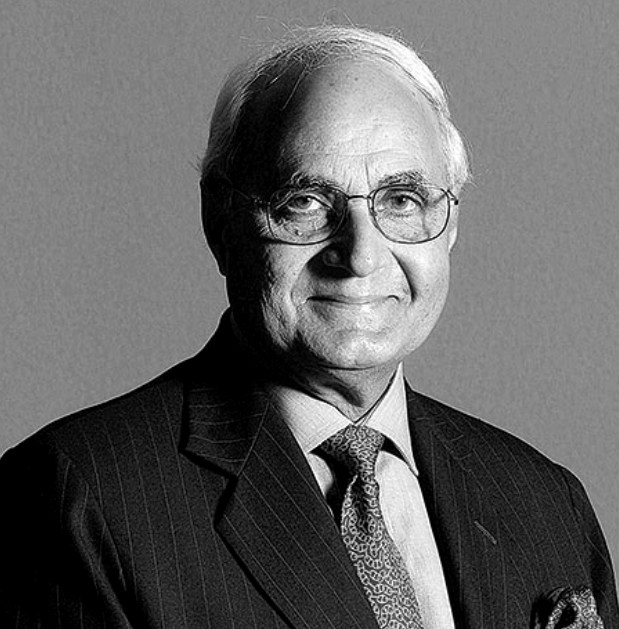
Kushal Pal Singh, born on August 15, 1931, in Bulandshahr, Uttar Pradesh, stands as a towering figure in India’s real estate sector.
A billionaire developer and a retired military officer, Singh’s journey is synonymous with the rise of Delhi Land & Finance (DLF) and, more profoundly, with the dramatic metamorphosis of Gurugram (formerly Gurgaon) from a relatively unknown rural area into a thriving, modern metropolis and a significant economic hub.
His strategic foresight and relentless pursuit of opportunities transformed not just a company, but an entire urban landscape, demonstrating the profound impact an individual’s vision can have on urban development.
The story of Gurugram is, in many ways, the story of K.P. Singh’s ambition and execution, illustrating how a determined individual can profoundly alter a region’s economic and social trajectory.
This narrative extends beyond mere construction, encompassing the creation of a self-sustaining urban ecosystem.
His early life experiences, including his military background, provided a unique foundation that subtly influenced his later business decisions, showcasing how personal history can shape professional destiny.
II. Early Life and Military Foundations: A Formative Journey
Born into a family where his father, Chaudhary Mukhtar Singh, was a respected lawyer, K.P. Singh’s early academic pursuits led him to graduate in science from Meerut College before heading to London, England, to study aeronautical engineering.
His path took an unexpected turn during a visit to his uncle, who managed the stables at the Viceregal Lodge (now Rashtrapati Bhavan). An unforeseen encounter with Lord Wavell, the then-Viceroy of India, led to Wavell suggesting Singh take up riding.
This seemingly serendipitous event set in motion a chain of experiences that would shape his future.
His father, despite incurring financial debt, supported his riding endeavors in England. Singh’s burgeoning riding skills opened doors to interactions with British high society, leading to a romantic relationship. While playing polo near Windsor, he met an Indian
K.P. Singh: The Visionary Behind DLF and the Transformation of Modern Gurugram
Army officer who encouraged him to join a cavalry unit. This period highlights how chance encounters and access to elite networks can unlock unforeseen opportunities, suggesting that Singh’s early life exposed him to environments and connections that fostered a certain worldview or ambition, potentially laying the groundwork for future large-scale ventures. It underscores that success is not solely about qualifications but also about social positioning and the networks one cultivates.
Despite being drawn to settling in London, Singh ultimately chose a military career, a decision facilitated by being allowed to take the Indian Military Academy entrance exam in England and the Indian government agreeing to pay for his return journey.
He was commissioned into the distinguished Deccan Horse regiment and, in 1954, proudly led the Deccan Horse in the Republic Day parade.
This early commitment to service and discipline would later prove invaluable.
In 1960, Singh made a pivotal transition, resigning from the army to join his father-in-law, Chaudhary Raghvendra Singh, in his company, Delhi Land & Finance (DLF), which had been established in 1946.
This move, following earlier entrepreneurial attempts in stud farms and an unsuccessful battery company, indicated an underlying entrepreneurial drive.
Even the early failures likely provided valuable lessons in resilience and market dynamics, characteristics that would become central to his success in real estate.
III. The Genesis of a Real Estate Empire: K.P. Singh's Entry into DLF
K.P. Singh’s entry into DLF in 1960 marked the beginning of a transformative era for the company, though it was not without initial challenges.
DLF, founded by his father-in-law in 1946, was a nascent entity when Singh joined. Prior to this, Singh had explored other business avenues, including a stud farm and a battery company that ultimately failed, leading to legal disputes with creditors.
In 1960, he joined American Universal Electric Company, which later merged with DLF Universal Limited (DLF) in 1979, where he assumed the role of managing director alongside his father-in-law.
This period reveals an individual predisposed to identifying opportunities and taking risks, even when faced with setbacks.
K.P. Singh: The Visionary Behind DLF and the Transformation of Modern Gurugram
A significant turning point occurred in 1975 when Singh nearly sold his shares in DLF for 25 lakhs. This contemplation stemmed from a decision by his father-in-law and his own growing disillusionment with the real estate sector, largely due to the pervasive bureaucratic red tape.
However, he ultimately declined the transaction, a decision that would prove prescient. His initial frustrations were overcome by a deeper understanding of the potential, coupled with a willingness to tackle systemic challenges head-on, demonstrating immense resilience and a long-term vision.
The real estate landscape in India was dramatically reshaped by the Urban Land (Ceiling and Regulation) Act, 1976 (ULCRA). This Act, introduced by the Government of India to promote low-income housing and restrict vacant urban land ownership, faced considerable opposition from investors.
Singh, recognizing the profound implications of ULCRA, took charge of a dormant DLF. His primary objective was to secure exemptions for investors, a task that required meticulous study of the city’s limitations and regulatory nuances.
His strategic brilliance became evident as he identified the Old-Gurgaon Road as a crucial link between Delhi’s southern area and Haryana, a state that notably had not passed the ULCRA.
K.P. Singh: The Visionary Behind DLF and the Transformation of Modern Gurugram
This was a pivotal observation, as it allowed DLF to operate under more relaxed land acquisition laws. Singh revitalized the company by initially acquiring 30 acres and then rapidly expanding its land bank by purchasing land from local landowners and farmers.
This ability to identify and leverage differences in land laws, specifically Haryana’s regulatory environment, was a game-changer. It was not merely about finding land; it was about understanding the legal and political landscape to gain a competitive advantage. This approach highlights that early success in Indian real estate was heavily dependent on navigating complex and often contradictory government policies, effectively transforming regulatory constraints for others into opportunities for DLF. This strategic legal and political acumen proved as vital as traditional business skills.
V. Transforming Gurugram: A City Built on Vision
K.P. Singh: The Visionary Behind DLF and the Transformation of Modern Gurugram
K.P. Singh’s strategic engagement with the political leadership of India proved instrumental in transforming Gurugram.
In the 1980s, a chance meeting with Rajiv Gandhi, who would later become Prime Minister, opened a dialogue about business plans for Gurugram and how existing laws posed obstacles to land acquisition.
These discussions were not mere formalities; subsequent meetings with Rajiv Gandhi directly led to Indira Gandhi, then Prime Minister, changing Haryana’s land laws.
This legislative shift was a crucial development, paving the way for DLF to receive licenses for land development in 1981 and 1983.
This chain of events clearly illustrates the symbiotic relationship between political influence and large-scale infrastructure development in a developing economy like India.
It underscores that in this context, major private sector projects, particularly in real estate, often relied significantly on political support and legislative adjustments. K.P. Singh’s mastery of India’s political economy, leveraging relationships to create an enabling environment for his ventures, directly spurred regional economic growth.
His friendship with Rajiv Gandhi also played a vital role in resolving a dispute with senior politician Bansi Lal, who had attempted to undermine Singh’s business and sought his arrest.
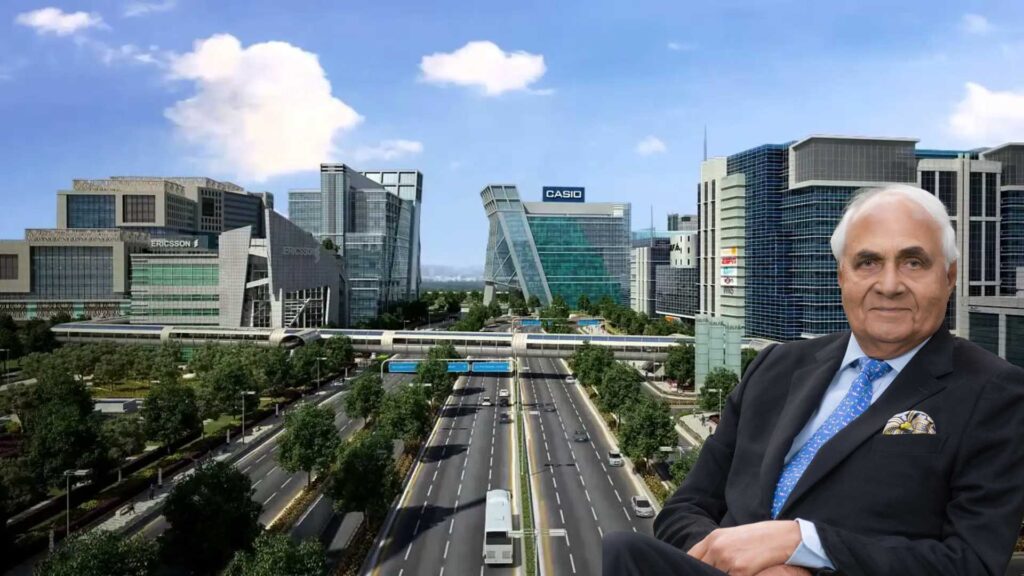
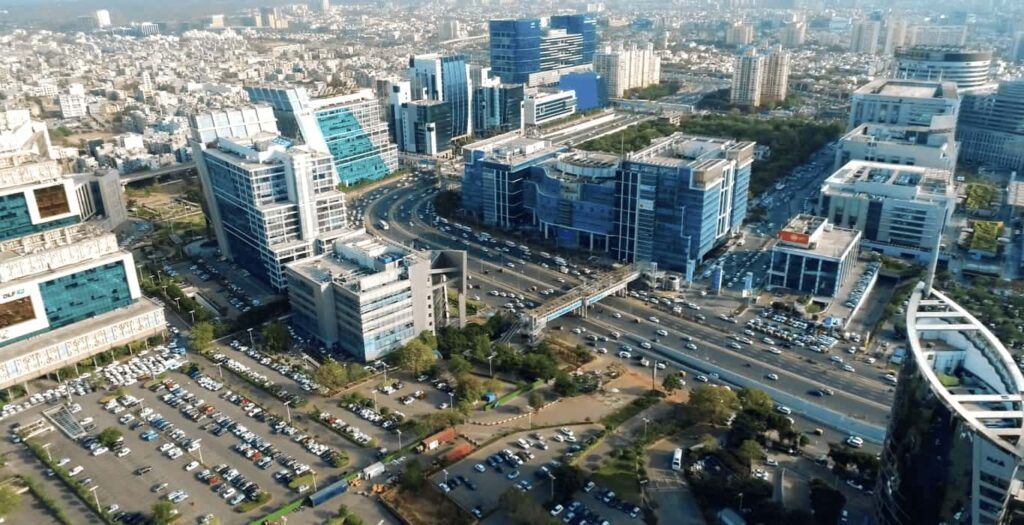
Under Singh’s astute leadership, Gurugram underwent a remarkable transformation from a collection of villages into a modern, developed urban center.
By the 1990s, DLF’s properties became highly attractive to major foreign corporations such as American Express, British Airways, IBM, and Nestle, drawing them in as tenants.
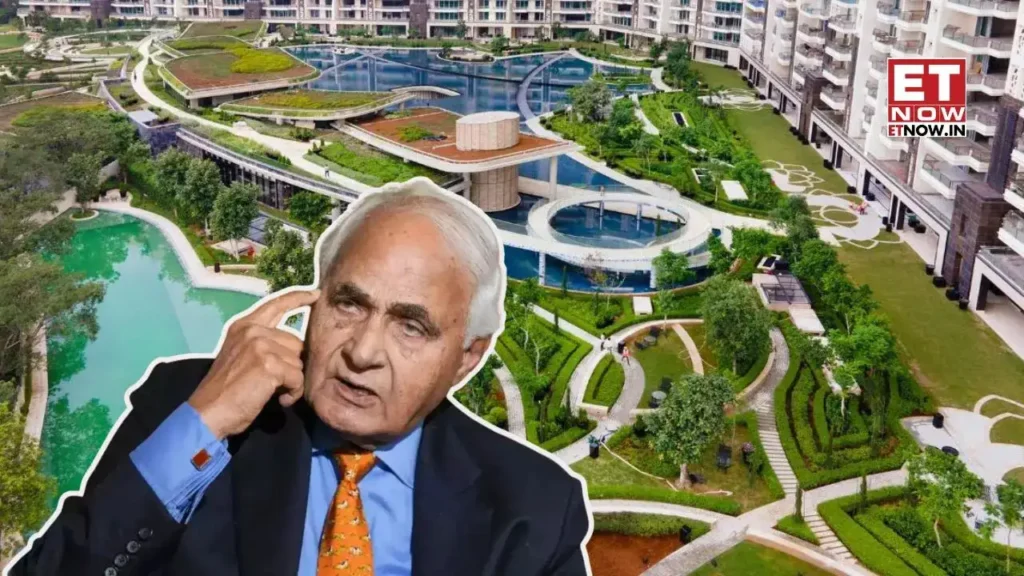
This influx was largely driven by the burgeoning growth in the outsourcing industry. DLF did not merely construct buildings; it created the comprehensive infrastructure, including earthquake-proof office buildings, apartments, shopping malls, and leisure facilities, that appealed to global businesses.
This strategic development positioned Gurugram as a preferred destination for the burgeoning IT and Business Process Outsourcing (BPO) sectors.
The timing of DLF’s development perfectly capitalized on India’s economic liberalization and the rise of the global service industry, making Gurugram a microcosm of India’s broader economic transformation.
Further solidifying its status as a modern and forward-thinking urban center, Singh’s Cyber City Gurugram received the world’s first LEED Platinum City and Community Certification in 2007, a testament to its sustainable design and development.
K.P. Singh: The Visionary Behind DLF and the Transformation of Modern Gurugram
V. DLF's Ascent: Milestones and Market Dominance
K.P. Singh’s assumption of the chairmanship of DLF in 1995 marked the beginning of an era of unprecedented growth and market dominance for the company.1 Under his leadership, DLF expanded exponentially, solidifying its footprint across Gurugram and extending its reach throughout India.
A monumental financial milestone was achieved in 2007 when DLF conducted its Initial Public Offering (IPO). This IPO successfully raised approximately US$2.24 billion, making it one of the largest public offerings in Indian history at the time.
This significant capital infusion propelled DLF to new heights. In the same year, the company’s market capitalization soared to an impressive $24.5 billion, a valuation that positioned Singh and his family among the wealthiest clans globally.
These figures are not just impressive statistics; they reflect the enormous growth potential perceived in the Indian real estate market during that period of economic liberalization.
DLF’s success under Singh was both a direct beneficiary and a key driver of India’s broader economic boom, showcasing how a single company could capture and capitalize on national economic trends to achieve unprecedented scale.
The strategic importance of land banking as a core competitive advantage was a principle Singh deeply understood and aggressively pursued. By 2015, he had expanded DLF’s land bank to over 10,000 acres, firmly establishing it as the largest in India.
In a land-scarce and often highly regulated market like India, possessing such a vast land bank provided a significant competitive moat, ensuring future development opportunities and insulating the company from escalating land costs.
This long-term strategic approach to growth demonstrated Singh’s understanding that control over prime land was the ultimate determinant of sustained success and market dominance in real estate.
The following table summarizes key milestones in K.P. Singh’s career and DLF’s growth, providing a chronological overview of his transformative impact:
Table 1: Key Milestones in K.P. Singh’s Career and DLF’s Growth
Year | Event/Milestone | Significance |
1931 | Born | Birth of the future real estate magnate. |
1954 | Led Deccan Horse in Republic Day Parade | Highlight of his military career. |
1960 | Resigned from Army, joined American Universal Electric Company | Transition to civilian business life. |
1979 | American Universal Electric merged with DLF, became MD | Formal entry into DLF’s leadership. |
1981, 1983 | DLF received land development licenses in Haryana | Crucial approvals enabling Gurugram’s development. |
1995 | Became Chairman of DLF | Assumed top leadership role, steering DLF’s major growth phase. |
2007 | DLF IPO (US$2.24 billion), market cap ($24.5 billion), Cyber City Gurugram LEED Platinum Certification | Landmark financial event, global wealth recognition, and sustainable development recognition. |
2011 | Autobiography Whatever the Odds published | Documented his journey and business philosophy. |
2015 | DLF’s land bank expanded to over 10,000 acres | Achieved largest land bank in India, cementing market leadership. |
2016 | Identified as PEP in Mossack Fonseca documents (Panama Papers) | Public scrutiny regarding offshore holdings. |
2020 | Retired from executive positions, Rajiv Singh succeeded as Chairman | Formal succession planning and transition of leadership. |
2024 (Oct) | Ranked 12th on Forbes India’s richest list ($20.5 billion net worth) | Continued recognition of his enduring wealth and legacy. |
2024 (Nov) | Why the Heck Not? published | Further literary contribution to his public narrative. |
VI. Beyond Real Estate: Other Strategic Ventures
K.P. Singh’s influence extended significantly beyond the confines of real estate development, demonstrating a broader business acumen and a strategic understanding of India’s economic needs.
He played a pivotal role in facilitating the entry of General Electric (GE) into India in the 1980s.
Initially, his efforts brought GE’s gas turbines into the country for critical infrastructure projects.
Subsequently, he continued to advise GE in various other industries, showcasing his extensive network and ability to bridge international corporations with the Indian market.
This positions Singh not merely as a developer but as a strategic facilitator for large-scale industrial and infrastructure projects, contributing significantly to India’s economic opening up and modernization beyond his core business.
Furthermore, Singh was instrumental in a landmark energy infrastructure project: the establishment of India’s first inter-state gas pipeline, the HBJ (Hazira, Bijeypur, Jagdishpur) pipeline, which was launched in 1986.
His involvement in this crucial national project signifies that his vision was not limited to property development but encompassed broader national development.
He recognized that robust infrastructure was essential for overall economic growth, which would, in turn, create a more favorable environment for the real estate sector. This demonstrates a macro-economic perspective in his business strategy, where he understood and actively contributed to the foundational elements necessary for national progress.
K.P. Singh: The Visionary Behind DLF and the Transformation of Modern Gurugram
VII. Accolades and Public Recognition
K.P. Singh’s remarkable career has been marked by numerous prestigious awards and recognitions, reflecting not only his immense economic success but also his contributions to society and international relations.
In 2000, the Government of India conferred upon him The Samman Patra Award, acknowledging him as one of the Delhi region’s top taxpayers.
The Government of Delhi also honored him with the Delhi Ratna Award for his valuable contributions to the city’s development.
His global stature was recognized on March 24, 2008, when Forbes magazine named him the richest real estate baron and the eighth richest person in the world.1 In the same year, NDTV presented him with a special award at the Indian of the Year Award for his significant contributions to India’s economic growth.
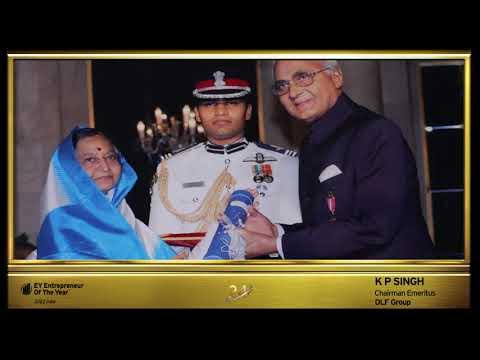
The Government of India further distinguished him with the Padma Bhusan award on January 26, 2010, one of the nation’s highest civilian honors.
Internationally, his diplomatic efforts were recognized on October 4, 2010, when Prince Albert II of Monaco conferred upon him the Decoration of Officer of the Order of Saint Charles, in acknowledgment of his two decades of service as Honorary Consul General of Monaco in Delhi.
In 2011, he received the Entrepreneur of the Year award at The Asian Awards.
This diverse range of accolades, from Forbes recognition for wealth to national civilian honors and international diplomatic awards, indicates that K.P. Singh was acknowledged for his business success and his broader contributions to society, economy, and even international relations.
This suggests his public image transcended that of a mere businessman, positioning him as a figure of national and international significance.
Beyond his professional achievements and formal honors, Singh has also contributed to the literary world.
His autobiography, Whatever the Odds: The Incredible Story Behind DLF, was published in 2011, with renowned business leader Jack Welch speaking at its launch.1 More recently, in November 2024, he co-authored Why the Heck Not? with Aparna Jain.
The publication of these books suggests a conscious effort to document his journey, share his insights, and shape the public narrative of his legacy. This implies that Singh understood the importance of narrative control and contributing to the historical record of Indian entrepreneurship, potentially inspiring future generations.
The following table provides a comprehensive overview of K.P. Singh’s awards and recognitions:
Table 2: Awards and Recognitions of K.P. Singh
Year Conferred | Award/Recognition | Conferring Body/Source | Significance/Reason |
2000 | The Samman Patra Award | Government of India | Recognized as one of Delhi region’s top taxpayers. |
Date not specified | Delhi Ratna Award | Government of Delhi | For valuable contribution to Delhi’s development. |
2008 (March 24) | Richest real estate baron & 8th richest person globally | Forbes magazine | Recognition of his immense wealth and global standing. |
2008 | Special Award at Indian of the Year Award | NDTV | For contributions to India’s economic growth. |
2010 (Jan 26) | Padma Bhusan award | Government of India | One of India’s highest civilian honors. |
2010 (Oct 4) | Decoration of Officer of the Order of Saint Charles | Prince Albert II of Monaco | For two decades of contributions as Honorary Consul General of Monaco in Delhi. |
2011 | Entrepreneur of the Year award | The Asian Awards | Acknowledgment of his entrepreneurial prowess. |
VIII. Navigating the Storm: Controversies and Challenges
Despite his numerous successes, K.P. Singh’s career has also been marked by several controversies, particularly concerning his close ties to the political establishment and issues of corporate governance.
His long-standing association with the Indian National Congress political party and the Nehru-Gandhi family has been a recurring source of public debate and scrutiny.
This relationship led to his identification as a politically exposed person (PEP) by Mossack Fonseca, a Panamanian corporate service provider, in 2016.
The recurring theme of “close ties to political parties” and the PEP designation underscores the inherent challenges of operating at the nexus of business and politics in India. While political connections were instrumental for DLF’s growth, they also brought heightened public and legal scrutiny, highlighting the double-edged sword of influence in a developing democracy.
A notable controversy emerged from a 2011 real estate deal between DLF and Robert Vadra, Priyanka Gandhi’s husband. Arvind Kejriwal publicly accused the transaction of heavily favoring Vadra in exchange for political favors, sparking widespread debate.
However, in 2023, the Haryana government stated in the Punjab and Haryana High Court that no violations were found in the deal.
This resolution, while coming years later, points to the legal complexities and protracted nature of such allegations in India’s legal system.
DLF and K.P. Singh also faced significant regulatory action from the Securities and Exchange Board of India (SEBI). In 2014, SEBI banned Singh, DLF, and six other entities from capital markets for three years.
The ban was imposed due to non-disclosure of related party transactions, insufficient financial details of subsidiaries, and inadequate disclosure of outstanding litigation during DLF’s 2007 IPO.
SEBI further imposed a substantial fine in 2015, and as of 2019, DLF’s appeal against these actions was pending in the Supreme Court of India.
This SEBI ban is a significant indicator of tightening regulatory oversight in India’s capital markets and a shift towards greater transparency requirements for large corporations.
It implies that as DLF grew and went public, it faced a higher bar for corporate governance, and past practices, even if common, were now subject to stricter enforcement.
Further scrutiny arose in April 2016 when Singh’s name appeared in the Panama Papers. Documents from Mossack Fonseca revealed that his son Rajiv, wife Indira, daughter Pia, and her husband Timmy Sarna had established offshore companies in the British Virgin Islands.
The Panama Papers revelation, alongside the SEBI action, highlights global trends in financial transparency and the increasing scrutiny of offshore holdings for high-net-worth individuals, reflecting an evolving landscape of corporate accountability.
X. Conclusion: An Indelible Mark on India's Urban Landscape
Kushal Pal Singh’s journey from a military officer to a real estate titan has left an indelible mark on India’s economic and urban development.
His profound impact is most visibly manifested in the transformation of Gurugram, which stands as a testament to his strategic vision, his unparalleled ability to navigate complex regulatory and political environments, and his unwavering entrepreneurial spirit.
Under his leadership, DLF evolved from a small family business into a real estate behemoth, fundamentally reshaping the urban landscape of northern India.
Singh’s legacy is defined by his foresight in identifying Gurugram’s potential, his diplomatic skill in influencing policy, and his relentless drive to build modern infrastructure that attracted global businesses. Despite facing controversies related to political ties and corporate governance, his achievements in creating new economic opportunities and improving urban living for millions are undeniable.
As he transitioned from executive roles, the strong family involvement and the enduring wealth of his empire ensure that K.P. Singh’s influence as a pioneer of modern Indian real estate will continue to shape the industry for generations to come.
His career serves as a powerful narrative of ambition, resilience, and the transformative power of vision in shaping a nation’s growth.